In one sentence
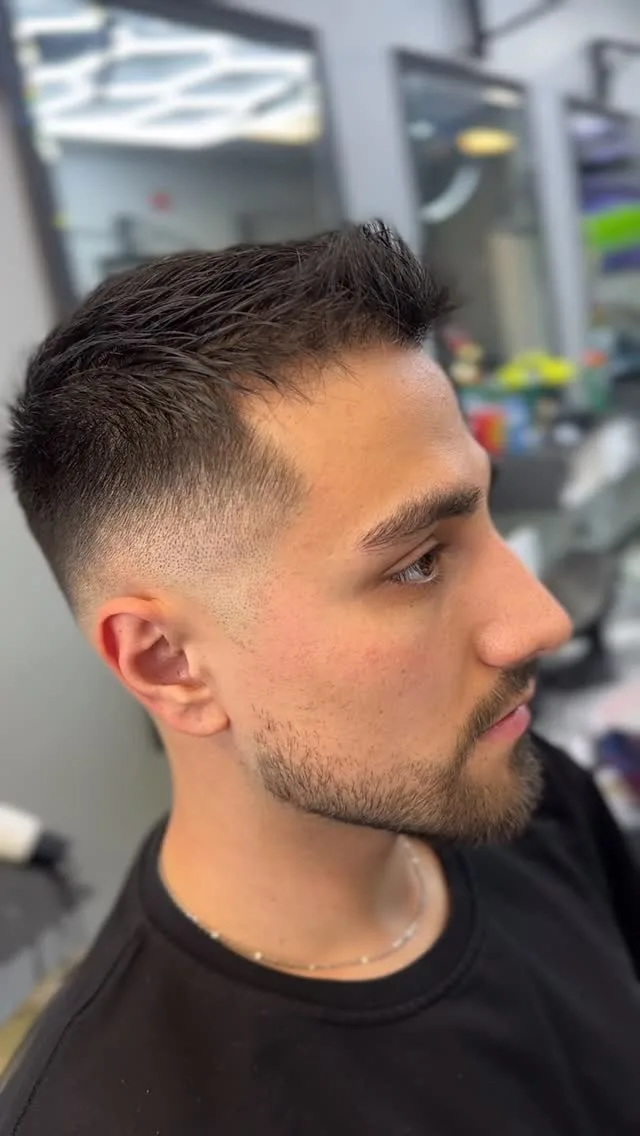
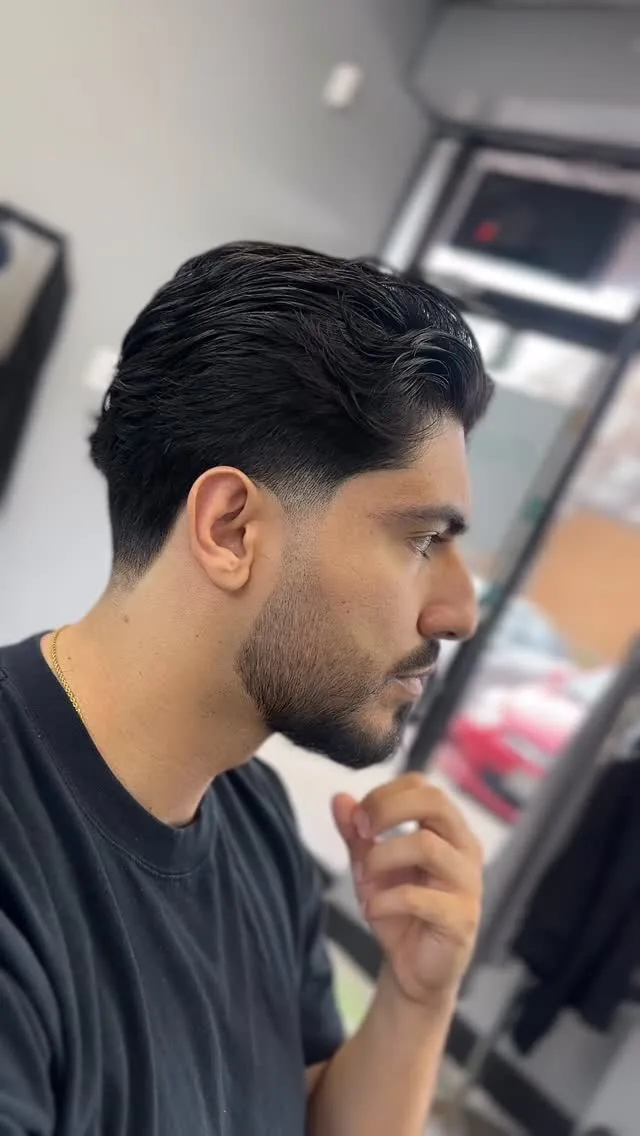
A burst fade blends the hair around the ear in an arc, shortest at the ear and growing out in every direction, while the neckline and the back stay long instead of being faded.
The shape, explained
Picture a normal fade: a horizontal band of blending that runs all the way around the sides and back of the head. Now take that band and bend it into a half-circle centred on the ear. Right behind the ear it's shortest, often skin. Moving up toward the top, forward toward the temple, or back toward the nape, the hair gets longer. The blend "bursts" out from the ear.
Because the arc curves upward at the back, the hair at the nape is never faded. That's the defining feature. On a burst fade you keep the length down the back of the neck, which is what makes a mohawk strip or a mullet tail possible.
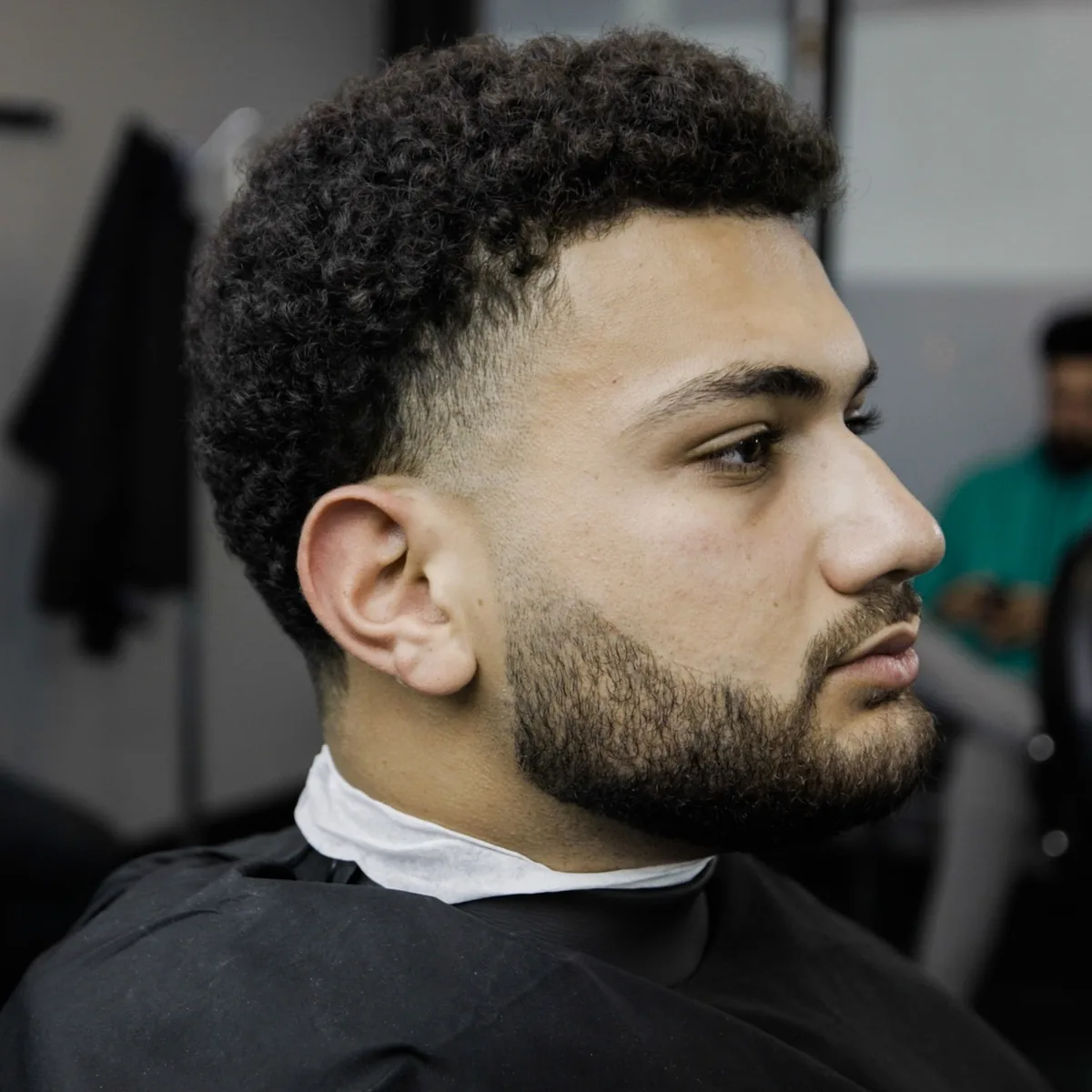
Burst fade vs drop fade
These two get mixed up because both curve. The difference is which way.
| Fade | How it curves | Back of the neck | Typical top |
|---|---|---|---|
| Burst fade | Arcs up and around the ear in a semicircle | Left long | Mohawk, frohawk, mullet, curly top |
| Drop fade | Follows the hairline, dipping down behind the ear toward the nape | Faded, with the fade "dropping" lower at the back | Textured crop, quiff, slick-back |
| Regular (low/mid/high) fade | A straight horizontal line all the way round | Faded | Anything |
Rule of thumb: if you want the back faded, you want a drop fade or a regular fade. If you want the back long, you want a burst fade.
Who a burst fade suits
- Curly, coily and textured hair. The arc around the ear cleans the sides while the curls stay full on top and down the back. Pair it with a taper at the nape if you want the back tidier without losing it.
- Mohawks and frohawks. The strip of length down the centre needs the sides faded and the back left alone. That is a burst fade by definition.
- Modern mullets and "burst fade mullet". Short sides, business at the back. The burst fade is what stops it looking like a 1980s cut.
- Waves and short textured tops. A tighter, lower burst reads almost like a temple taper with a cleaner shape.
It's less suited to very straight, fine hair worn short all over, where a regular mid or high fade gives a cleaner result. If you're unsure, the Cut Finder will steer you.
How to ask for a burst fade
- "Burst fade." Most barbers know the term. If there's any doubt, add "around the ear, leave the back".
- How tight. "Skin at the ear" or "down to a zero" for maximum contrast, or "half guard" for something softer.
- How big the arc is. A small burst stays close to the ear; a big burst sweeps up toward the crown. Point to where you want it to end.
- The back. "Leave the back long" (mohawk/mullet), or "taper the neckline" if you want it tidy but not faded.
Keeping it sharp
The burst is a shape, and shapes blur as hair grows. Expect it to look its best for about two to three weeks, with a quick line-up in between if you want the edges crisp. Keeping the back long means less upkeep there; it's the arc that needs the regular visit.
Want one? Book a Fade Haircut at Furious Fades and ask for a burst fade. Curly and textured hair is a specialty here.
Book your fadeCommon questions
What kinds of fades do you do?
Every kind: skin (bald) fades, taper fades, low, mid, high, drop and burst fades, plus crops, curly-hair fades and classic scissor cuts. See The Cuts page for real examples and where each fade starts.
How often should I get a fade touched up?
Skin and high fades look their sharpest for about 2 weeks; mid fades 2–3 weeks; low fades and tapers 3–5 weeks. A quick line-up in between keeps the edges crisp without a full cut. Rebook before you leave the chair to keep your slot.
Which fade should I get?
Low fades are subtle and work-friendly, mid fades are the most versatile, high and skin fades give maximum contrast, and tapers are the most low-key. Try our Cut Finder for a personal suggestion, then confirm with your barber in the chair.